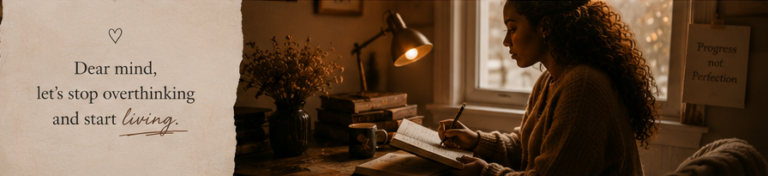

Your Emotions Aren’t The Enemy – Part 2
Your Emotions Aren’t The Enemy – Part 2
Dear thoughtful reader
Welcome back, beautiful human, you made it to Part 2 – which means you’re serious about learning how to stop being emotionally hijacked by your own brain. I love that for you.
If Part 1 was about getting acquainted with your emotions (naming them, questioning them, breathing through them), Part 2 is where we roll up our sleeves and get messy. Because knowing your feelings is one thing, but holding space for them without drowning? That’s next-level emotional mastery – and it’s not for the faint-hearted.
We’re diving into the real grit: how to feel without spiralling, how to walk away without ghosting your own growth, and how to stop bullying yourself in the name of “self-awareness.” And yes, we’re going to talk about therapy, because honestly, you don’t need to be falling apart to ask for help. You just need to be human. So, take a deep breath (yes, again). And let’s keep going. Emotional fluency is your birthright, not some luxury reserved for the zen and the journal-obsessed.
So, let’s continue, shall we?
Feel It Without Feeding It
REAL TALK: there’s a massive difference between feeling your emotions and feeding them like they’re a stray cat that now lives in your house, sleeps in your bed, and controls your calendar. Feeling your emotions? That’s healthy – necessary even. Marinating in them until you’re emotionally pruning? That’s drama.
Most of us were raised on a steady diet of emotional repression. We were taught (directly or indirectly) that big feelings were too much, too loud, too inconvenient. “Don’t cry, you’re fine.” “Calm down.” “Stop overreacting.” So, we learned to either bottle everything up like emotional hoarders or let it all explode in one messy, regrettable moment. Personally, I used to think of myself as “strong,” “a tough cookie”. What that woefully really meant was: I was emotionally constipated. I wore my composure like armour, convinced that crying or showing I was overwhelmed meant I was weak, unstable, unable, and incapable. And then one day, I embarrassedly snapped at a friend over a coffee order. A COFFEE ORDER! For shame! And bless her self-assured heart, she just looked at me (with a bit of side-eye obviously) and gently said, “You good?” Oh my dearest thoughtful reader, I was NOT good. I was emotionally bloated. Like, full-on months of unprocessed feelings trapped inside my body resembling a traffic jam of sadness, anger, resentment, and guilt all hooting at each other.
So, what do you do instead of stuffing it all down or losing your cool at the wrong time, in the wrong place, on the wrong person? Let it move. But don’t let it take over. Here are a few of my go-to emotional release valves:
- Talk it out with someone safe. Not someone who’ll hijack your pain with a “That happened to me too!” monologue, but someone who can hold space without trying to fix you.
- Write a rage letter. Say all the unfiltered, not-fit-for-public-consumption things you need to say. Then burn it. Or keep it. Whatever feels right.
- Move your body. Dance, scream into a pillow, go for a walk/run with murdery music in your ears. Clean your entire kitchen like it just insulted your mother. Doesn’t matter, just get the emotion out of your system and into motion.
Why? Because emotions are energy. And energy that doesn’t move? It festers. It turns into sharp words, chronic tension, snarky text messages, or internalised shame. Let me say this loud and clear for the people at the back: Expression is not weakness. It’s emotional hygiene. You don’t shame yourself for needing to pee – you go. You don’t judge yourself for needing to shower – you wash. So why do we act like needing to cry, scream, vent, or shake it out is some kind of moral failure? It’s not. It’s what keeps us sane.
So, just to recap, by now, you’re naming your feelings, breathing through the chaos, questioning your brain’s shady narratives, and actually letting your emotions move through you instead of stockpiling them like emotional clutter. That’s growth. That’s emotional adulting. But emotional mastery isn’t just about what you do with your feelings, it’s also about knowing when to back away slowly… and when you’re just emotionally ghosting yourself.
Know When to Step Away (and When You’re Just Avoiding)
And for the sexy side of emotional intelligence: boundaries. Yes, those glorious, sanity-saving lines we draw to protect our peace, energy, and time. I don’t think that this can be overstated: sometimes, the wisest thing you can do is exit stage left and quick. From a heated argument. A job that’s draining the life out of you. A WhatsApp group chat that feels like a digital swamp of passive-aggressive memes and drama. Walking away can be power. It can be self-respect in motion. It can be a full sentence. But here’s the PLOT TWIST: not every walk-away is growth, sometimes, it’s fear in trainers.
Here’s the thing, avoidance often wears a disguise. It pretends to be “self-care” when it’s really self-sabotage with a skincare routine. We ghost people and call it boundaries. We quit jobs and call it alignment, when really, we’re just too scared to speak up. We bail on friendships, relationships, dreams because staying would mean sitting with discomfort. And let’s be honest, most of us would rather run a marathon barefoot on Legos than do that.
I know my fair share of people who have walked away from perfectly decent relationships. The person wasn’t toxic, they didn’t cheat, they weren’t walking red flags. They were… kind. Present. Safe. And that often scared the hell out of people. Why? Because real intimacy requires vulnerability. And vulnerability feels like standing naked in a glass box while everyone is staring. So, people bolt. Trust me, I’ve heard people spin it in many different ways. They call it “intuition.” But in reality? It’s just unhealed fear calling the shots.
So how do you know if stepping away is actual self-care or just an emotional escape plan? Ask yourself:
- Am I leaving to protect my peace, or am I leaving to avoid discomfort/growth?
- Is this boundary about honouring myself, or about shielding myself from growth?
- If I weren’t scared, would I still walk away?
The trick isn’t to never walk away; the trick is to know why you’re walking. Is it a boundary… or a bail-out? When in doubt? Don’t flinch. Pause. Breathe. Ask. Decide. Your nervous system will thank you. So will your future self.
Speaking about self while we’re unpacking emotional maturity, there’s one more relationship you absolutely need to check in on. No, not with your ex. Not with your boss. With YOU. Yip, sometimes the person doing the most emotional damage is the one living rent-free in your own damn head.
Stop Bullying Yourself
Let me offer you a wild idea: What if you treated yourself like someone you actually liked? Not tolerated. Not barely endured. Liked. Radical, right? Most of us are walking around with an inner critic who is basically a full-time emotional bully. They are rude, ruthless, relentless, and somehow always finds the worst possible way to talk to us. You spill your coffee or forget a deadline, and suddenly it’s: “Wow. Of course you screwed that up. You’re such a disaster. Get it together.” Excuse me?! Would you ever say that to your best friend? Your sister? A child? Your dog?? Nope. You’d probably be outraged just hearing someone say it to them. So why do you deserve it?
HONEST TRUTH: Self-compassion isn’t indulgent. It’s medicine. It’s choosing to show up for yourself in a world that profits off of your self-doubt. It’s not about fluffy affirmations or pretending you’re fine when you’re clearly falling apart. It’s about saying: “This is hard. I’m human. And it’s okay that I’m struggling.”
Say it with me:
“This. Is. Hard. I. Am. Human. And it’s okay that I’m struggling.”
Not “I’m fine.” Not “It’s nothing.” Not “Other people have it worse so I shouldn’t feel this way.” Just honesty. Just tenderness. Just enough softness to soothe the sharp edges of your day. Because here’s the thing: fighting your feelings doesn’t make you strong. It just makes you exhausted. You’re not meant to war with yourself every time life gets heavy. You’re meant to hold your feelings, like you would a child or a friend – gently, without judgment, until the storm passes. So, the next time you feel yourself spiralling into shame, try speaking to yourself like someone who deserves kindness. Because you do. You so do. Please, I beg you start softening that inner voice and holding space for your emotions instead of attacking them. And perhaps just then you might start to realise… some of this stuff is just too big to hold alone. SPOILER ALERT: You’re not supposed to.
Get Help if You Need It (Seriously, Sis)
Can we go ahead and NORMALISE therapy already? Like, fully normalise it. Not just in Instagram captions or when celebrities do it, but in real life, for regular-regular folks who are just trying to survive without imploding. You do not have to wait until you’re sobbing in your car, binge-watching emotionally questionable rom-coms, or Googling “Why am I like this??” to get help. Sometimes you just need someone outside the group chat to look you in the eye (or via Zoom) and say,
“Sis… you’re not crazy. You’re just overwhelmed. Let’s unpack this mess together, shall we.”
Trust me, there’s no prize for white-knuckling your way through pain. No invisible committee handing out gold stars for pretending you’re fine when you’re actually falling apart. That strong, silent suffering? It’s a myth. And frankly, it’s soul destroying. Here’s what real strength looks like:
- Making a therapy appointment even when your anxiety tries to talk you out of it.
- Reaching out to a support group because you’re tired of feeling like the only one struggling.
- Reading books, listening to podcasts, following mental health pages on Instagram because healing doesn’t only happen on a couch.
- Telling a trusted friend, “Hey, I’m not okay, I haven’t been okay for a minute now,” and letting them sit with you in the mess.
It’s not weakness. It’s not oversharing. It’s self-respect in action. Vulnerability? That’s the real flex. It’s looking fear in the face and saying, “You don’t get to drive today.” It’s choosing to get support before everything implodes. It’s understanding that you matter enough to get help – not when it’s convenient, not when it’s urgent, but now. Nothing like the present to reach out. So, if the emotional waves are getting too high to ride solo, grab a damn life raft. In whatever form that looks like for you. There’s zero shame in that only power.
Final Thoughts: Mastering Your Emotions Isn’t About Perfection, It’s About Power.
Let’s get one thing straight: your emotions are not here to destroy you. They’re here to deliver messages about your boundaries, your desires, your values. About where it hurts and what needs healing. Mastering your emotions doesn’t mean becoming some unbothered Zen goddess who floats above life with sage and essential oils. This isn’t about numbing out, shrinking down, or pretending you’ve got it all figured out. Emotional mastery isn’t performance, it’s power. And real power doesn’t come from suppressing your feelings. It comes from owning them, understanding them, and knowing how to ride the wave without drowning in it. It means feeling fully without falling apart. It means knowing when to sit still and when to scream into a pillow.
So, the next time your feelings show up uninvited like a chaotic ex? Let them in (the feelings, not the ex). Listen. Learn. And then decide what you want to do next because you are in the driver’s seat now. You have the tools:
- Name your emotions so they stop sneaking up on you.
- Breathe like you mean it because your nervous system deserves peace.
- Question your thoughts because your brain is brilliant but not always honest.
- Feel your feelings without letting them set up camp and run the show.
- Step away when you need to but call yourself out when you’re just dodging growth.
- Stop bullying yourself and finally speak to yourself like someone worth loving.
- And when it’s too much to carry alone? Ask for help because you deserve to heal out loud, not just survive in silence.
And that my dear thoughtful reader? That’s emotional freedom. That’s what emotional rebellion looks like. That is what self-leadership feels like. It’s messy, powerful, and it’s human-as-hell growth.
So no, you don’t have to “get over it.” You just have to get through it – with tools, with grace, and with the unshakeable belief that you are allowed to feel and still be in charge of your life. Your emotions aren’t the enemy, they are messengers. Mirrors. Sometimes chaos, sometimes clear. Learn their language. Lead yourself through it. And baby? Watch what happens when you stop fearing your feelings and start using them. Mic drop!
You got this sis

P.S: Send this to a friend who needs to hear it. Better yet, send it to yourself the next time you’re spiralling. Emotions aren’t weakness, they’re wisdom wrapped in fire. Now go master them like the rebel you are.
My Dearest Thoughtful Reader
Let me introduce myself: my pen name is The Thoughtful Rebel and I can be pretty loud. BUT to my defence, I’m not loud for the sake of making noise, rather because I’ve become unafraid to speak the quiet truths that most would rather whisper (or avoid entirely).
Don’t worry, I’m not the kind of rebel who burns everything down, rather I’m the kind who asks why it was built that way in the first place.

Betty M.
Author
Join the Rebellion, thoughtful reader.
Subscribe for letters that hold your hand and you accountable — the kind that sting a little at first but settle into your heart like truth and comfort. Pour something warm, we’ve got stories to tell.